
Visiting Auschwitz-Birkenau: A Complete Visitor Guide (with Booking Data)


Visiting Auschwitz-Birkenau requires more preparation than most places you will ever travel to — and rightly so. Entry to the Memorial is free, but every visitor needs a personalised entry pass reserved in advance at visit.auschwitz.org; passes are not sold at the entrance. A visit to both parts of the former camp takes around 3.5 hours on site, plus the journey from Krakow. And if you are wondering when to go: our booking records from more than 300,000 reservations show that October is by far the most crowded month and Saturdays the busiest day — while November, December and Thursdays are the quietest times to pay your respects.
This guide covers everything you need to plan a visit to the Auschwitz-Birkenau Memorial: how to get there from Krakow, the entry rules, what you may bring, how to behave at a memorial site, how long to allow, and — using data you will not find anywhere else — when the site is at its busiest and quietest.
What Auschwitz-Birkenau Is
Auschwitz was established by Nazi Germany in 1940 on the outskirts of Oświęcim, a Polish town annexed to the Third Reich. The first transport — 728 Polish political prisoners from the prison in Tarnów — arrived on 14 June 1940. From 1942 onwards, Auschwitz became the largest of the extermination centres in which the so-called “final solution to the Jewish question” was carried out.

According to the Auschwitz-Birkenau Memorial, around 1.1 million people perished at Auschwitz during the less than five years of its existence: approximately 1 million Jews, some 70,000 Poles, about 21,000 Roma and Sinti, around 15,000 Soviet prisoners of war, and some 12,000 prisoners of other backgrounds.
Soviet forces liberated the camp on 27 January 1945, finding around 7,000 surviving prisoners, most of them in critical condition. The Auschwitz-Birkenau State Museum was created by an act of the Polish parliament on 2 July 1947 to preserve the site, and it is today inscribed on the UNESCO World Heritage List.
Understanding this before you go matters. Auschwitz-Birkenau is not an attraction. It is a cemetery, a place of remembrance and one of the most important sites of Holocaust education in the world. Every practical rule described below exists to protect its dignity.
The Two Parts of the Memorial
The Memorial consists of two former camp sites, and the Museum states clearly that it is essential to visit both:
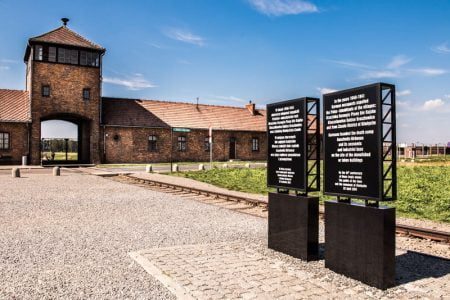
- Auschwitz I — the original camp, where the main exhibitions are housed in the original brick barracks. Every visit starts here.
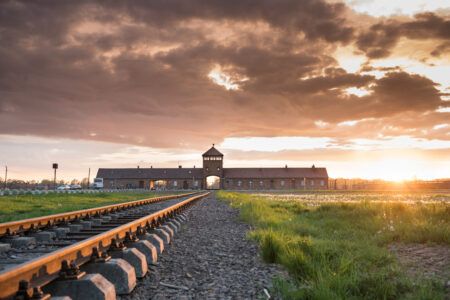
- Auschwitz II-Birkenau — the vast site of the extermination camp, with the ruins of the gas chambers and crematoria, the unloading ramp, and the remaining wooden and brick barracks.
The two sites lie 3.5 km apart. A free Museum shuttle bus runs between them, equipped with a platform for wheelchair users. You may also walk the distance or take a taxi. Paid car parks are available near both sites.
How to Get There from Krakow
Oświęcim lies west of Krakow, roughly an hour and a quarter to an hour and a half away by road, depending on traffic. You have several options:
- Public bus. The Lajkonik company operates direct buses from Krakow to the Museum car park. This is the least expensive option, though timetables limit your flexibility, and seats fill up in busy months.
- Train. Trains run from Krakow to Oświęcim railway station, which is about 1,500 metres from the Museum; a Park & Ride car park is located nearby.
- Car. Paid car parks are available near both parts of the Memorial. Remember that your visit starts at the Auschwitz I site.
- Organised visit from Krakow. If you prefer not to manage transport, entry passes and timing yourself, a guided day trip from Krakow handles the journey, the reservation and the licensed guide in one arrangement — useful above all in the months when individual entry passes are hardest to obtain (more on that below).
Both Krakow-Balice and Katowice-Pyrzowice international airports lie within about 50 km of Oświęcim, so the Memorial is also reachable directly from either airport.
Entry Passes and Admission Rules
This is the section that catches most visitors out, so read it carefully.
- Entry to the Memorial grounds is free of charge. Fees apply only when you engage a Museum guide-educator.
- Every visitor needs a personalised entry pass, reserved in advance at visit.auschwitz.org. The pass carries your name.
- No entry passes are sold at the entrance. Arriving without a reservation, especially between spring and autumn, usually means you will not get in that day.
- Bring photo ID. All visitors — including those arriving in organised groups — must have their personalised entry pass and an identity document with them.
- Demand is high. Passes for popular dates and times are taken well in advance. Across our own bookings, the median visitor reserves 26 days before the visit date (the average is 41.6 days) — in practice, plan about a month ahead, and earlier for autumn weekends.
Opening hours
The Memorial opens at 7:30 every day, with closing times that change through the year:
| Month | Opening hours |
|---|---|
| December | 7:30 – 14:00 |
| January, November | 7:30 – 15:00 |
| February | 7:30 – 16:00 |
| March, October | 7:30 – 17:00 |
| April, May, September | 7:30 – 18:00 |
| June, July, August | 7:30 – 19:00 |
The Museum is closed on 1 January, 25 December and Easter Sunday. Note that the closing hour is the last moment to enter; you may remain on site for some time afterwards to finish your visit — check the current details on auschwitz.org when you book.
What You May Bring
Rules on belongings are strict and enforced at security screening:
- The maximum size of backpacks or handbags brought into the Memorial is 35 × 25 × 15 cm — roughly a small daypack.
- Larger luggage must be left in your vehicle or in the luggage facilities; do not arrive with a suitcase and no plan for it.
- Comfortable shoes matter more than most visitors expect: Birkenau alone covers a vast open area, and you will be on your feet for several hours on uneven ground.
- In summer, bring water and sun protection; in winter, dress warmly — most of the Birkenau site is exposed to the weather.
Check the current, complete list of rules at visit.auschwitz.org before your visit, as security requirements can change.
Dress Code and Conduct
The Museum asks visitors to behave with due solemnity and respect, and to dress in a manner befitting a place of this nature. In practice this means:
- Dress as you would for a cemetery or a place of worship — modest, unremarkable clothing.
- Keep conversations quiet, especially inside the buildings and near the ruins of the gas chambers.
- Do not eat while walking through the Memorial.
- Do not pose for cheerful photographs, and never photograph other visitors in distress. Check the current photography rules on auschwitz.org — some interior spaces have restrictions.
- Follow your guide’s or the staff’s instructions at all times; certain rooms are places of particular remembrance where silence is expected.
None of this is complicated. The rule of thumb is simple: you are a guest at the site of the largest mass murder in modern European history, and everything about your visit should reflect that.
How Long Does a Visit Take?
Plan for a full half-day at minimum, and a full day door to door from Krakow:
- On site: about 3.5 hours for a standard visit covering both parts of the Memorial. The Museum recommends a minimum of about 90 minutes for Auschwitz I and the same again for Auschwitz II-Birkenau.
- The shuttle transfer between the two sites adds a short break in the middle.
- From Krakow, allow 6–7 hours in total once you include travel in both directions and time for security screening before entry.
Rushing the visit defeats its purpose. If your schedule only allows two hours on site, choose a different day.
When to Visit: What 300,000+ Bookings Tell Us
Most guides tell you to “avoid summer”. Our reservation data — more than 300,000 bookings analysed across a full year (November 2024 – October 2025) — shows that the reality is different, and it surprises almost everyone.
October, not July, is the most crowded month. In October we recorded 5,514 bookings covering 14,141 guests — roughly 80% more bookings than in July. Autumn tour groups, school visits and city-break travellers converge on the Memorial just as the daily opening hours begin to shorten, which concentrates visitors into fewer time slots.
| Period | Bookings (our data) | Relative crowding |
|---|---|---|
| October | 5,514 (14,141 guests) | Peak — the busiest month of the year |
| July | ~3,060 | High — busy, but well below autumn |
| November–December | ~1,500 per month | Quietest of the year |
July figure derived from the October comparison (~80% more bookings in October than July); other months fall between these values.
Three practical conclusions follow:
- The quietest months are November and December — around 1,500 bookings per month, roughly a quarter of October’s volume. Days are short and cold, but the Memorial in winter is a profoundly quiet, contemplative experience.
- The quietest day of the week is Thursday; the busiest is Saturday. If you can shift a weekend visit to a weekday, you will share the site with markedly fewer people.
- Book about a month ahead. The median lead time across our bookings is 26 days (mean 41.6 days). For an October Saturday, treat a month as the bare minimum; for a Thursday in November, you will usually have far more flexibility.
A quieter visit is not merely more comfortable — it changes the character of the experience. Standing on the ramp at Birkenau in near-silence is very different from doing so amid dozens of groups.
On the Day: How a Visit Unfolds
Knowing the sequence in advance removes most of the stress from the day. A typical visit looks like this:
- Arrive at Auschwitz I with time to spare. Every visit starts at the Auschwitz I site, and you will pass through security screening before entry — plan to be there at least 30 minutes before the time on your entry pass, and earlier in the busiest months.
- Have your pass and ID ready. Both are checked; the name on your entry pass must match your identity document.
- Visit Auschwitz I first. The main exhibitions are housed in the original brick barracks. With a guide-educator, this part of the visit is structured for you; individually, allow at least the recommended 90 minutes.
- Take the shuttle to Birkenau. The free Museum bus covers the 3.5 km between the sites; the mid-visit transfer is also the natural moment for water and a short rest.
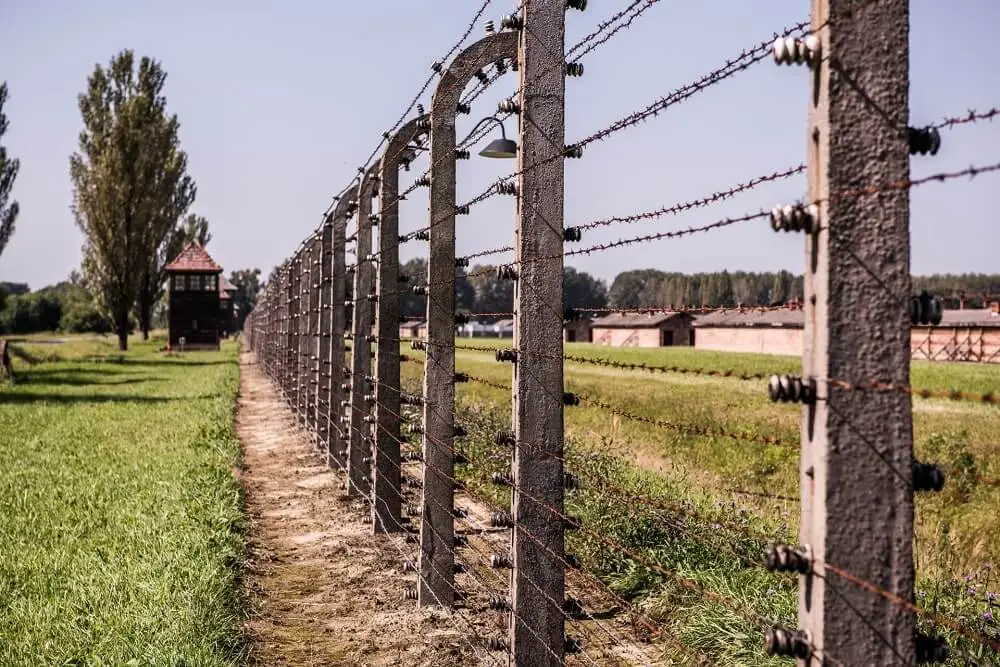
- Walk Auschwitz II-Birkenau. The scale of the site is what most visitors are least prepared for — the ramp, the ruins of the gas chambers and crematoria, and row after row of barracks and chimneys stretching to the tree line. Again, allow no less than 90 minutes.
- Leave time to sit quietly afterwards. Most people need it. If you are travelling with others, agree in advance that the journey back to Krakow can be a silent one.
Guided or Self-Guided?
You can visit the Memorial in two ways, and both are legitimate:
With a guide-educator. Museum guide-educators lead visits in many languages, for a fee, and organised groups visit with an educator. A good educator does far more than point out buildings — they carry the testimony of the site, answer difficult questions and give structure to an emotionally demanding few hours. For first-time visitors, and especially for anyone travelling with teenagers, this is the option we recommend without hesitation.
Individually, without an educator. The Museum offers entry passes for individuals visiting without an educator, typically in the early and late parts of the day. You walk the site at your own pace with the help of the exhibitions and information boards. This suits returning visitors, and those who strongly prefer solitude and their own rhythm — but be aware that individual passes for convenient hours are among the first to disappear during busy months.
Whichever you choose, prepare beforehand. Even an hour spent with the historical materials on auschwitz.org changes how much you take from the visit.
Frequently Asked Questions
Do I need a ticket to visit Auschwitz-Birkenau?
Entry to the Memorial grounds is free of charge, but every visitor needs a personalised entry pass reserved in advance at visit.auschwitz.org. A fee applies only if you visit with a Museum guide-educator.
Can I buy an entry pass at the gate?
No. The Museum states that no entry cards are available at the entrance. Reserve online in advance — based on our booking data, about a month ahead is a sensible minimum.
How long does the visit take?
About 3.5 hours on site for both parts of the Memorial — the Museum recommends at least 90 minutes each for Auschwitz I and Auschwitz II-Birkenau. From Krakow, allow 6–7 hours door to door including travel.
Is Auschwitz suitable for children?
The Museum does not recommend visits by children under the age of 14. The exhibitions include material that is genuinely distressing. For teenagers aged 14 and over, careful preparation before the visit is strongly advised.
What is the best month to visit?
Based on over 300,000 of our bookings, November and December are the quietest months (around 1,500 bookings per month in our data), while October is the most crowded — 5,514 bookings and 14,141 guests, about 80% more than July. Spring weekdays are a good middle ground between weather and crowds.
What day of the week is quietest?
In our booking data, Thursday is consistently the quietest day and Saturday the busiest. If your itinerary allows, a weekday visit is noticeably calmer.
What size bag can I bring?
The maximum size for backpacks and handbags is 35 × 25 × 15 cm. Larger luggage must be left in your vehicle. Bring photo ID — it is checked together with your personalised entry pass.
How do I get between Auschwitz I and Birkenau?
The two sites are 3.5 km apart. A free Museum shuttle bus connects them and has a platform for wheelchair users; you can also walk or take a taxi. The visit always starts at the Auschwitz I site.
Is the Memorial open every day?
The Memorial opens daily at 7:30, closing between 14:00 (December) and 19:00 (June–August) depending on the month. It is closed on 1 January, 25 December and Easter Sunday.
Should I visit with a guide or on my own?
Both options exist. Individual entry without an educator is possible in certain time slots and is free; guided visits with a Museum educator carry a fee. For a first visit, we recommend going with a guide — the context an educator provides is difficult to replace.
Planning a school visit? We have prepared a free Teacher & Student Resource Pack — preparation notes, visit rules for school groups, discussion prompts and a glossary.
Planning Your Visit from Krakow
If you would like the practical side of the day — transport from Krakow, the timed reservation and a licensed guide — arranged for you, our Auschwitz-Birkenau study tour from Krakow covers all of it in a single booking. However you choose to visit, please visit: the Memorial exists so that what happened there is never forgotten.
Sources: Auschwitz-Birkenau State Museum (auschwitz.org, visit.auschwitz.org). Booking statistics: MrShuttle internal reservation data, November 2024 – October 2025 (300,000+ reservations). Verified July 2026 — always check auschwitz.org for current rules before travelling.